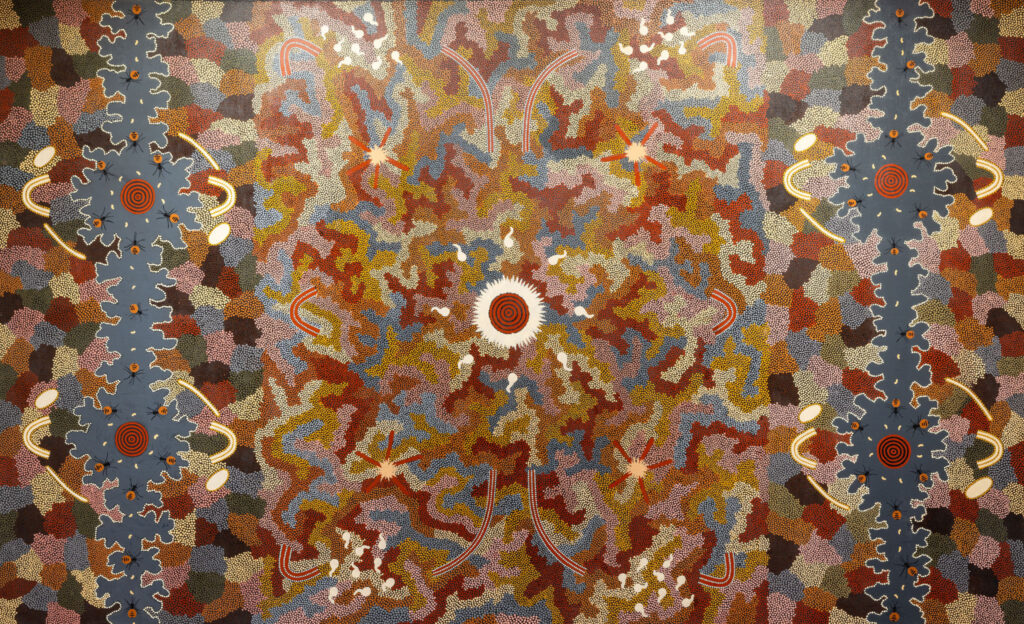
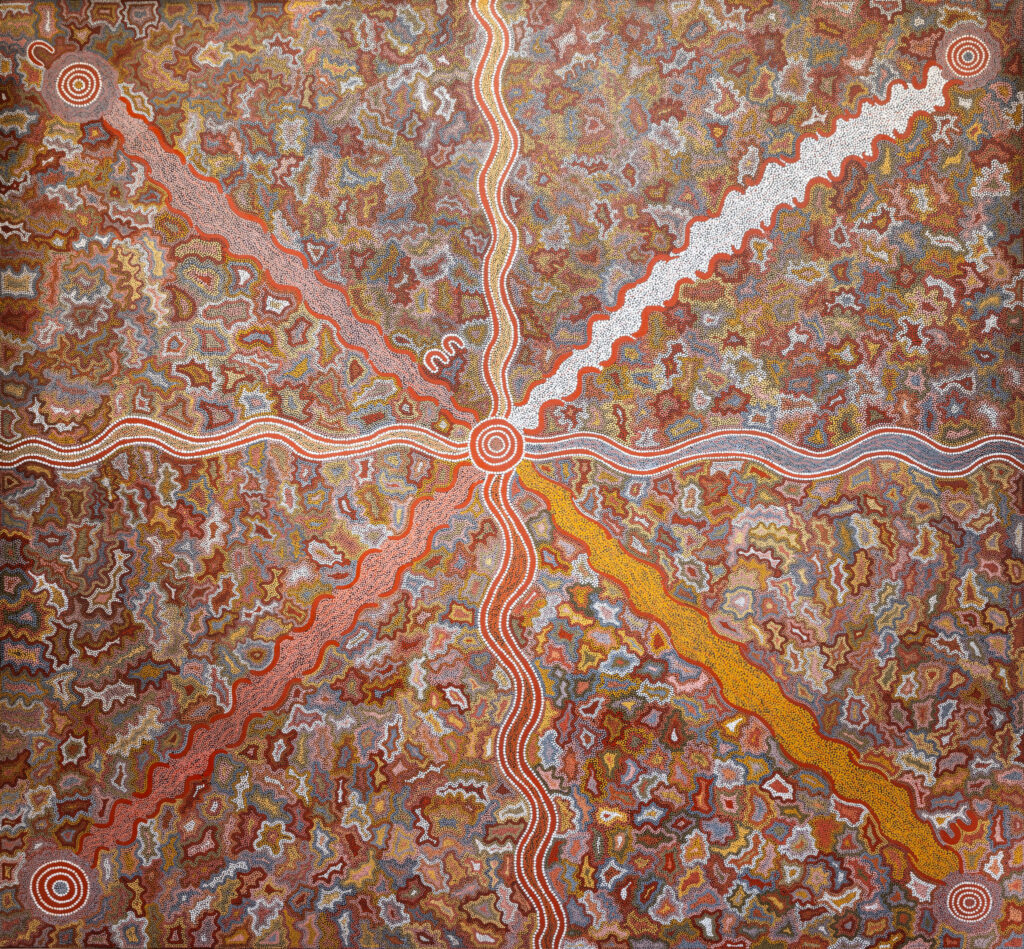
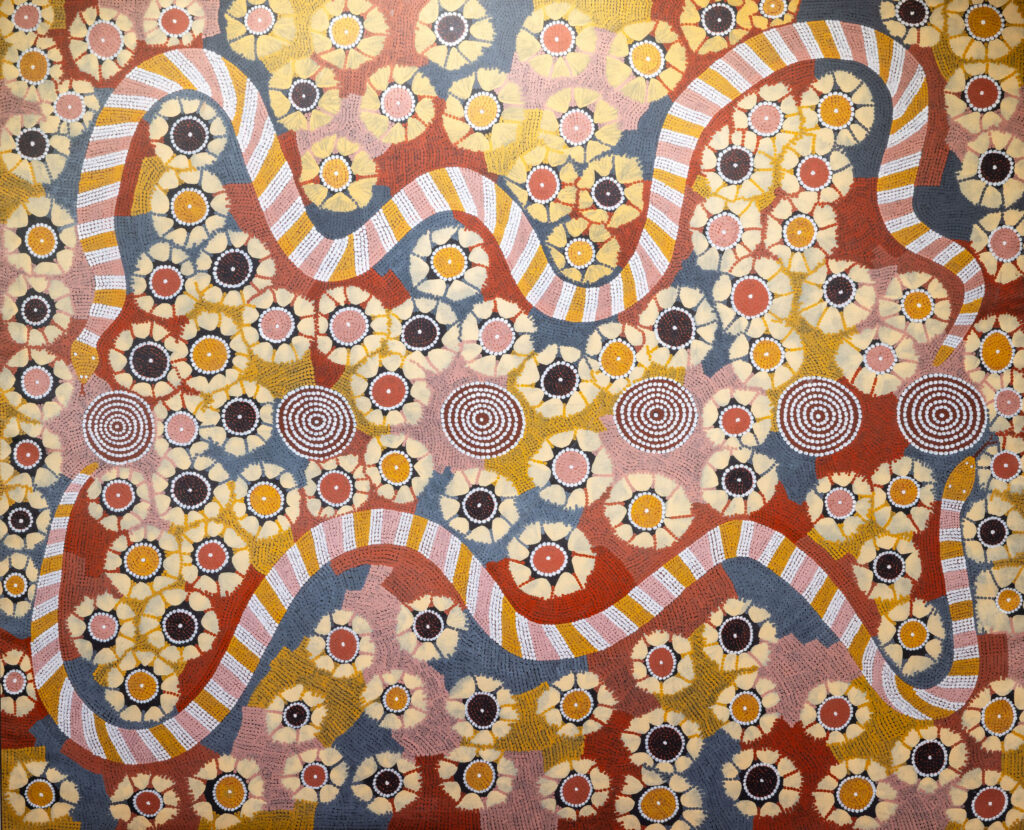
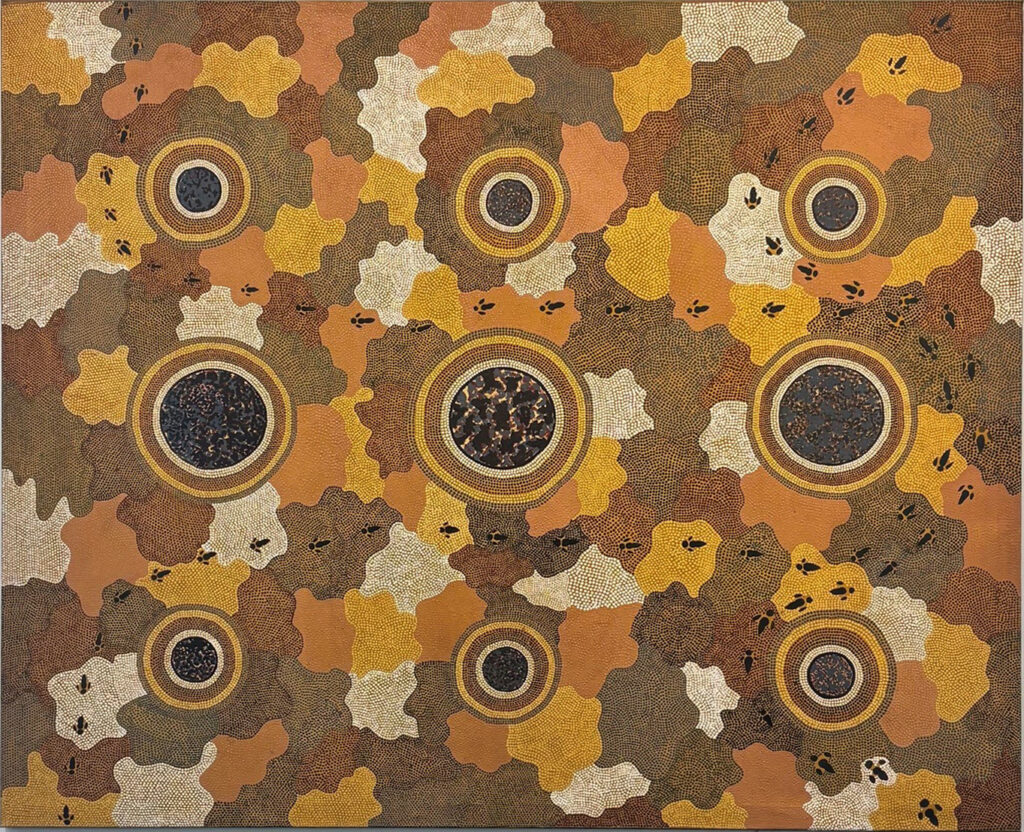
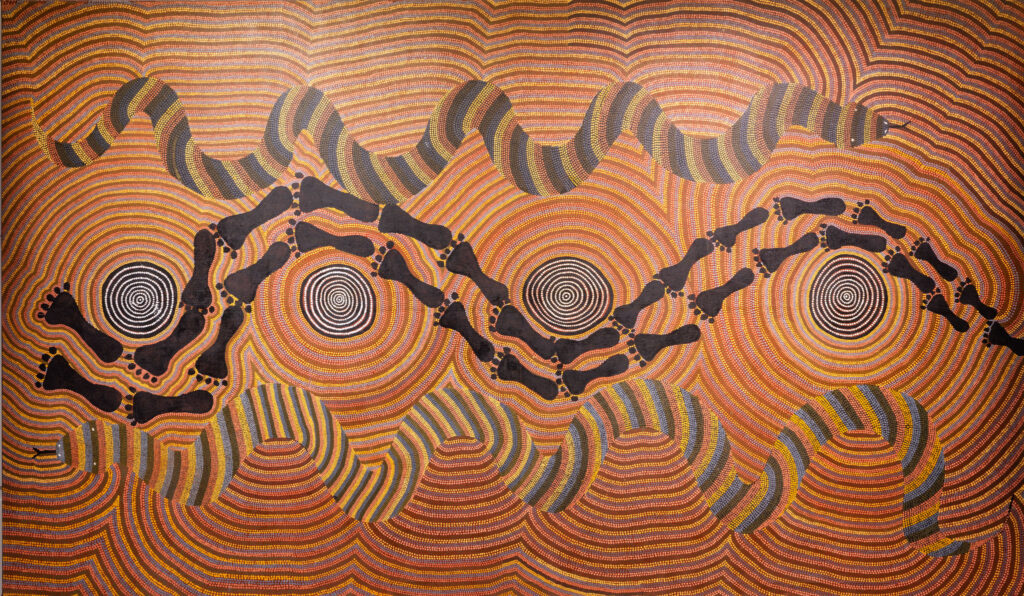
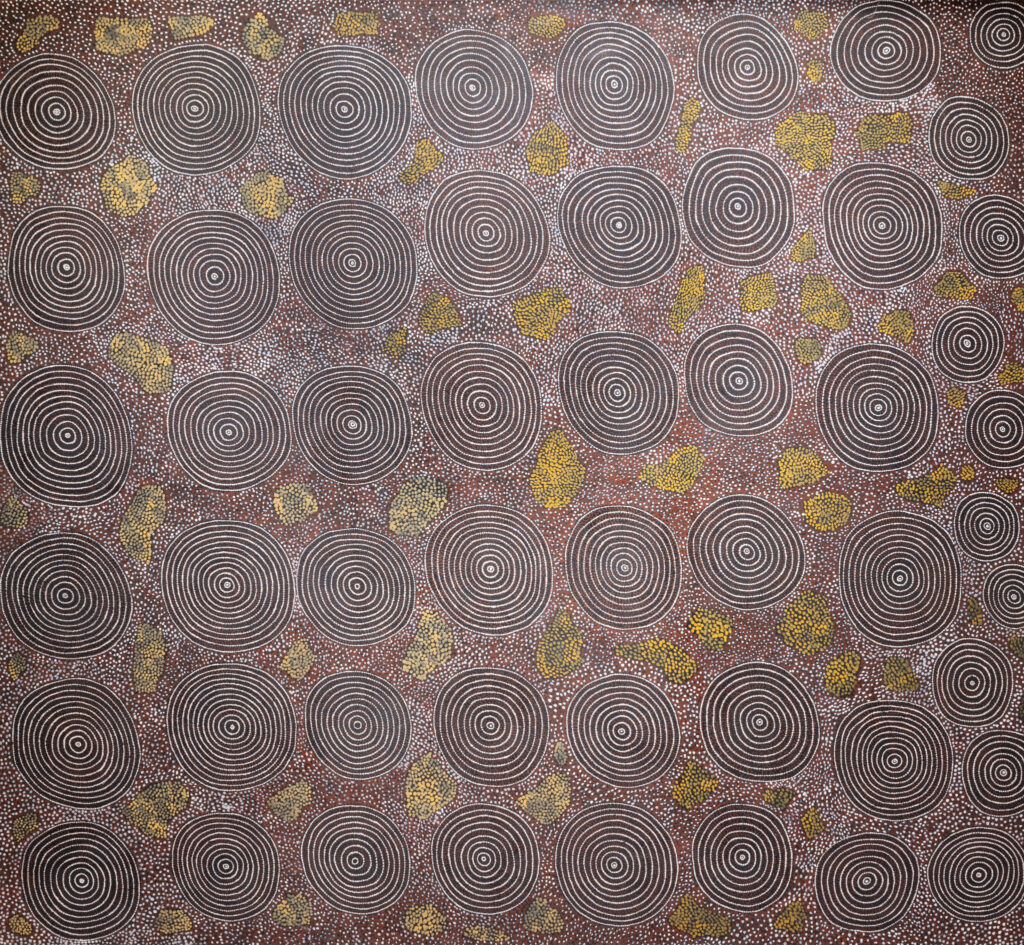
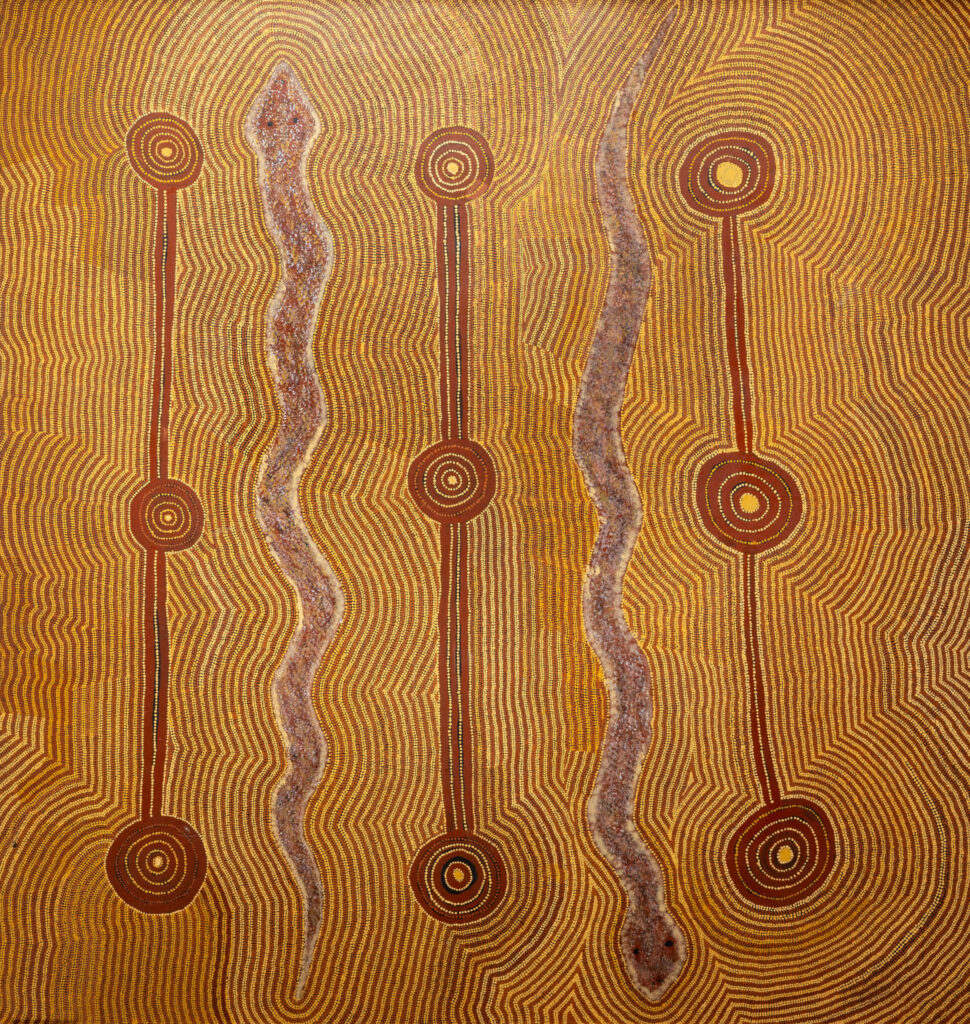
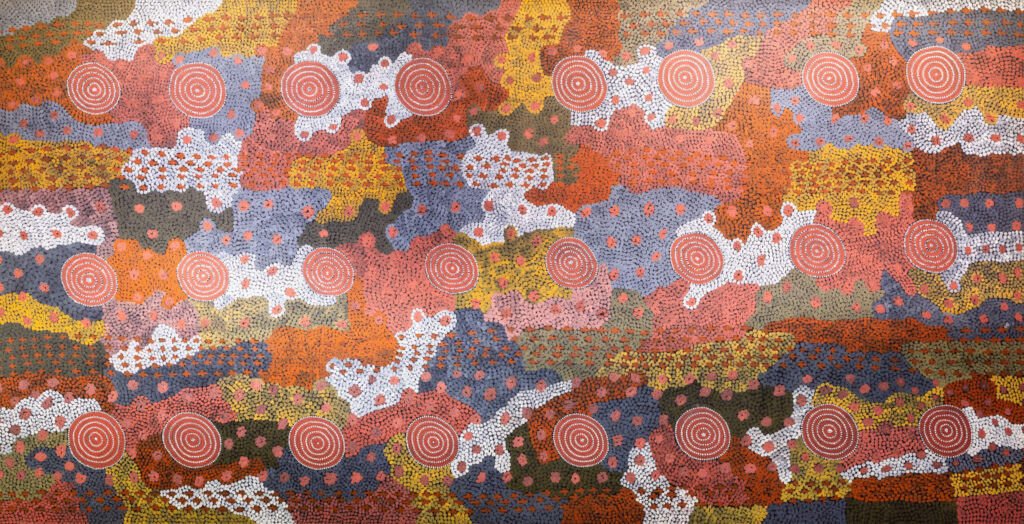
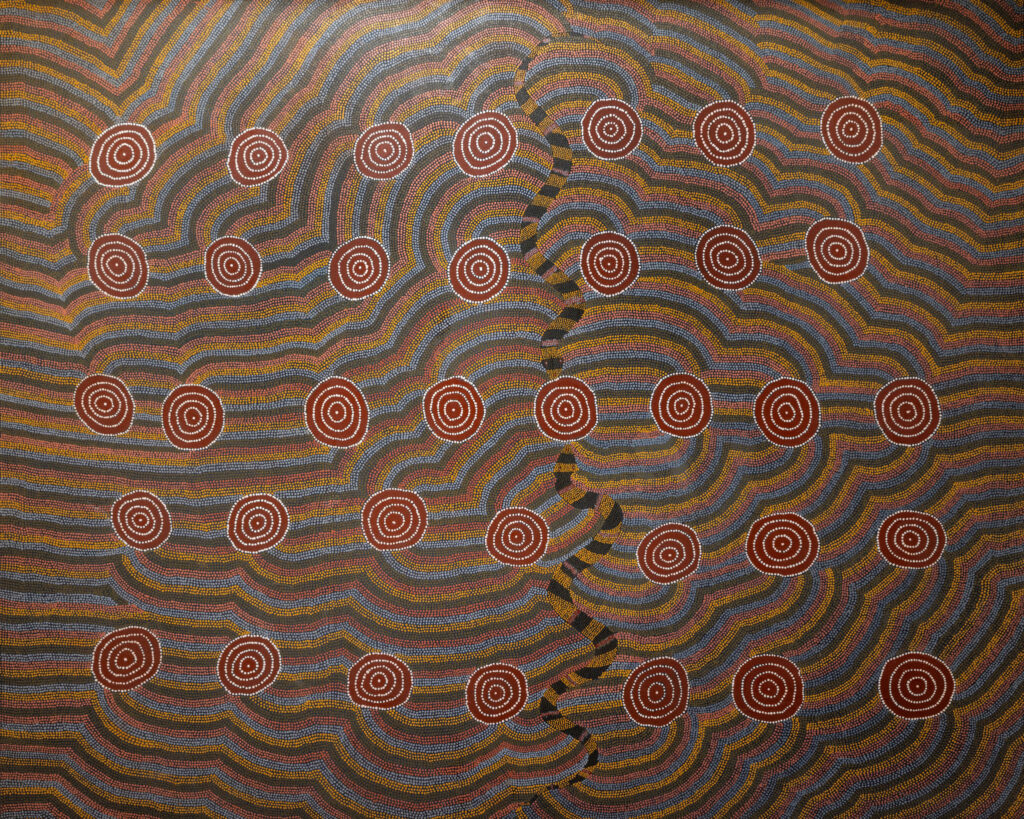
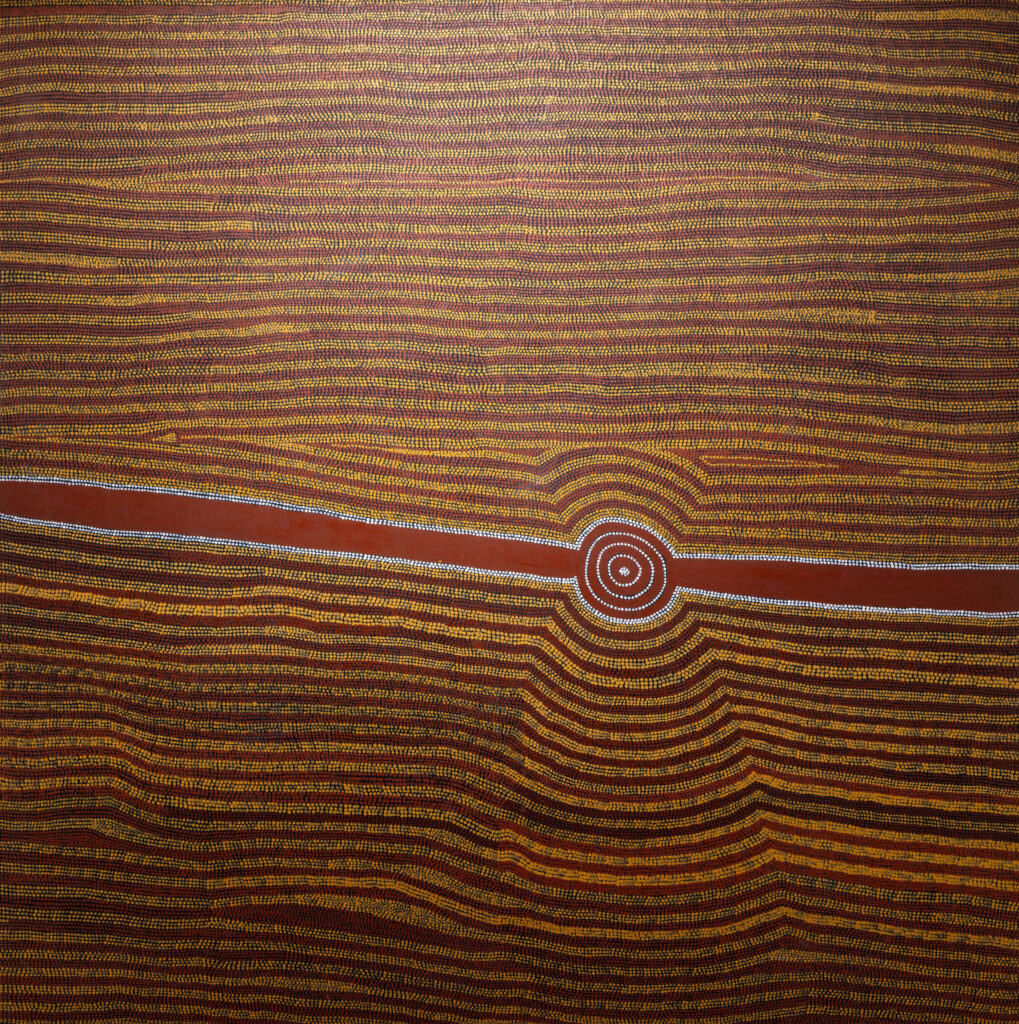
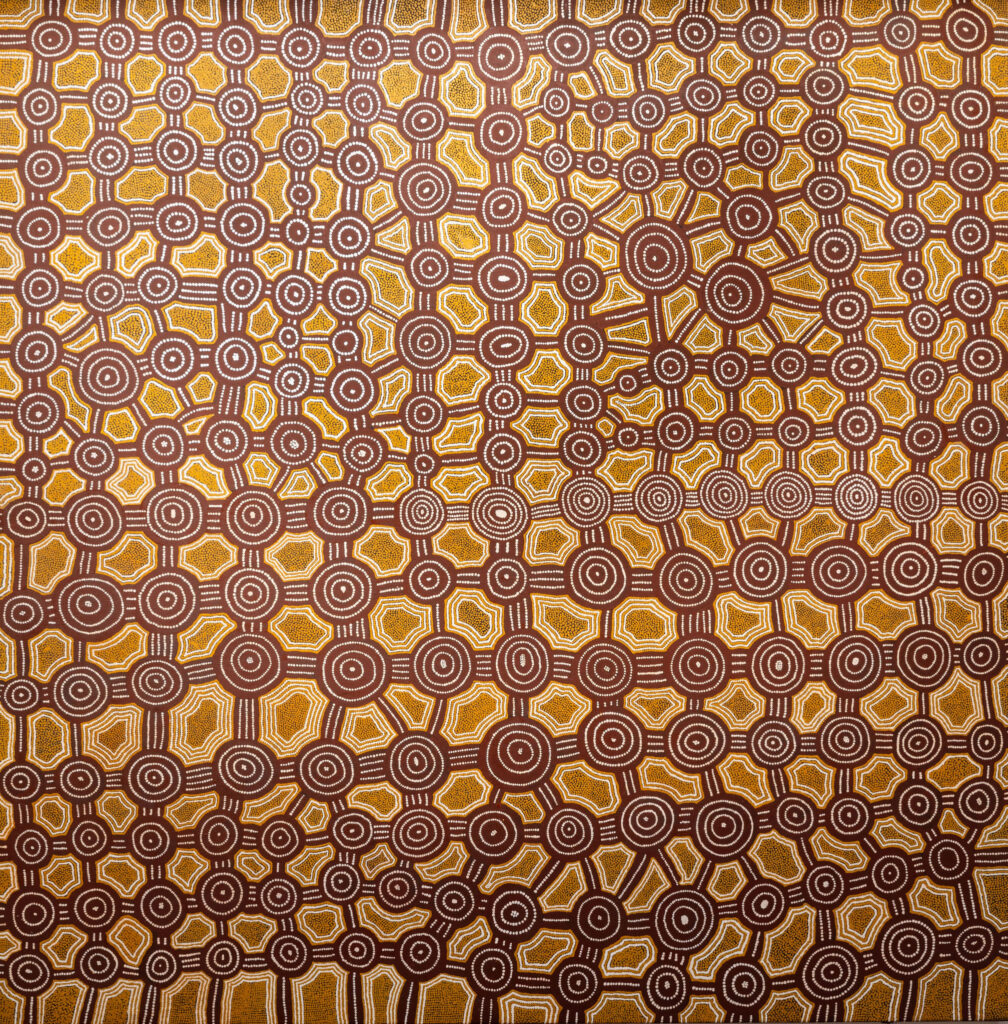
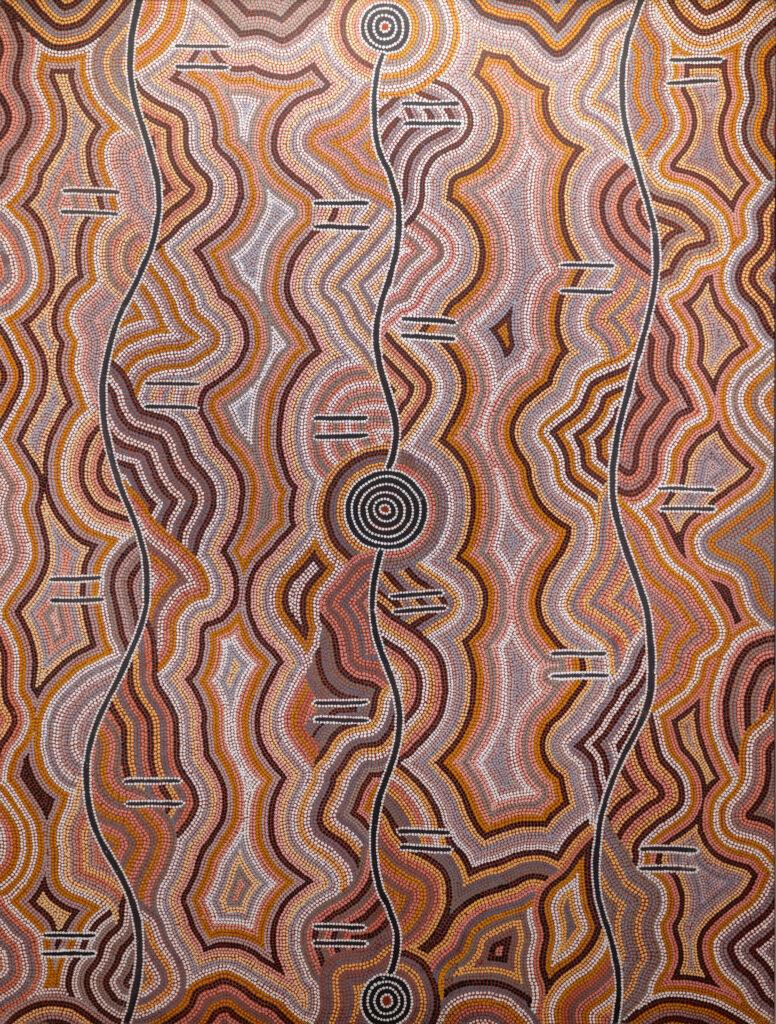
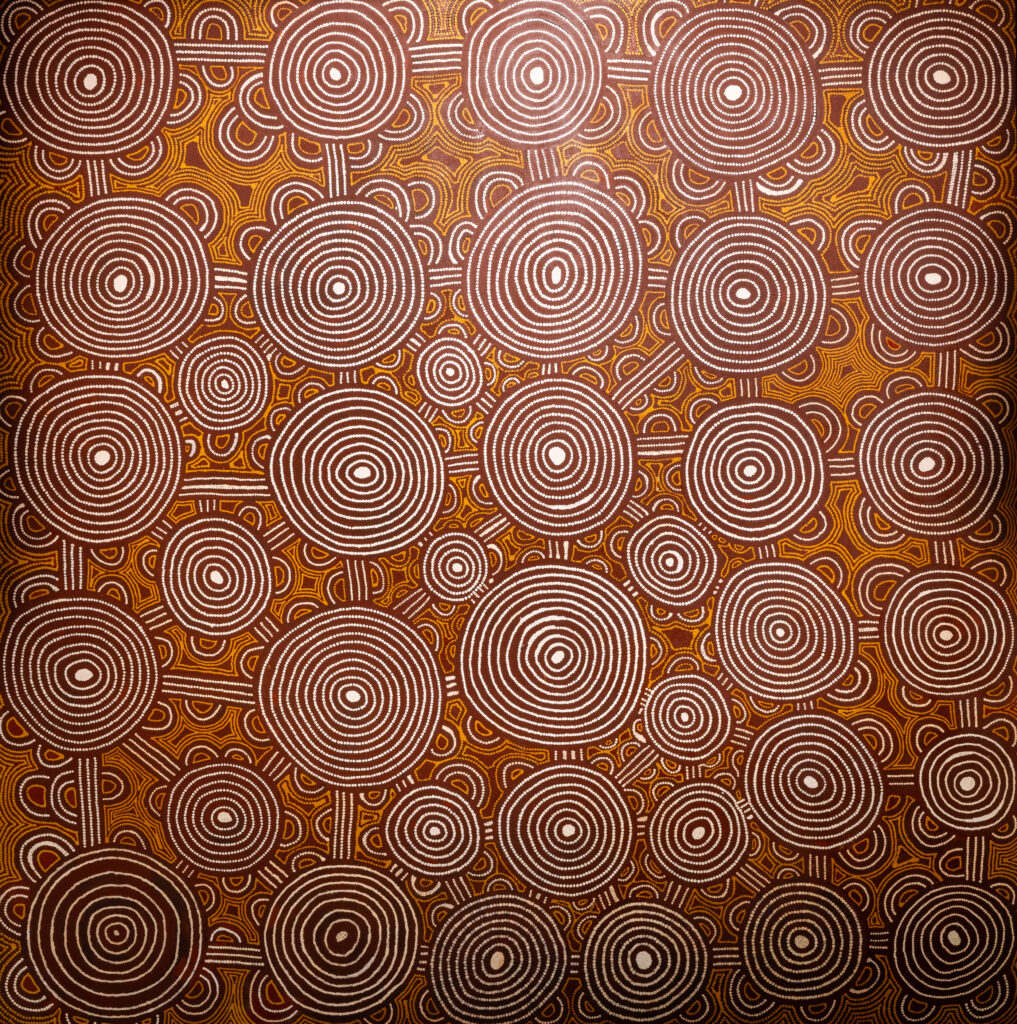
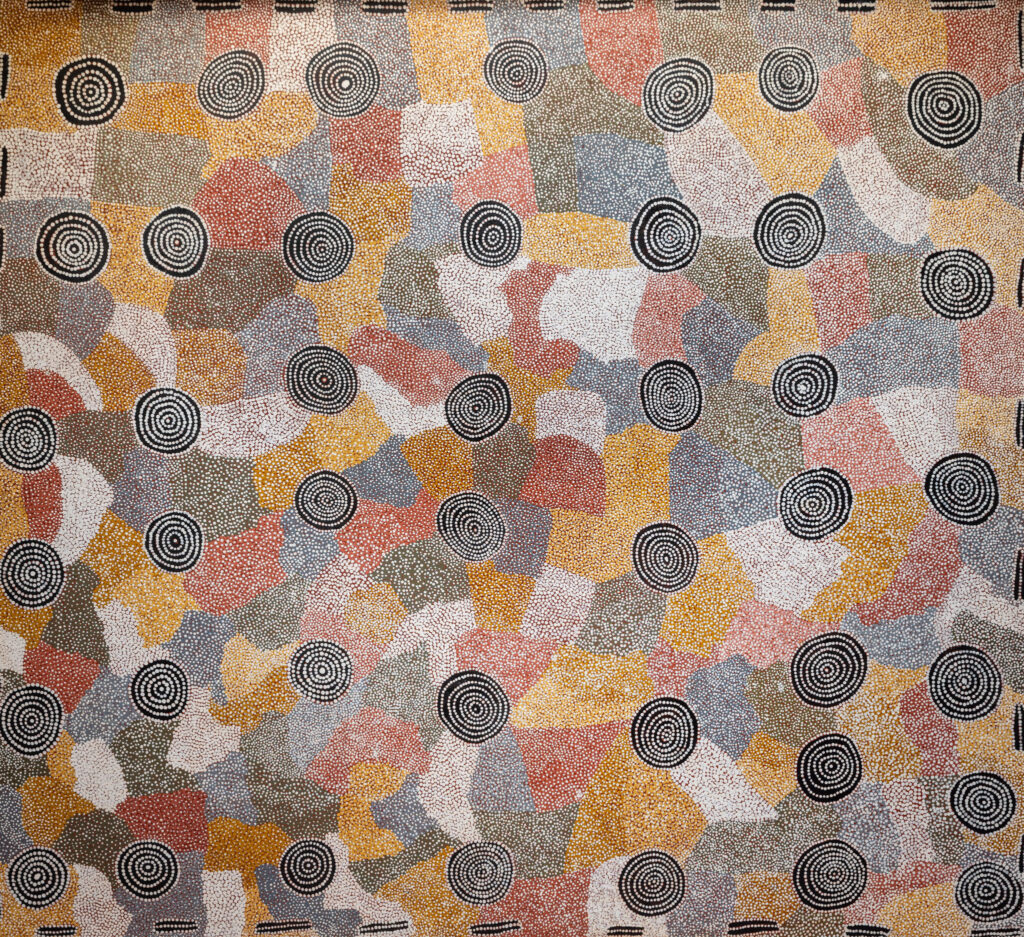
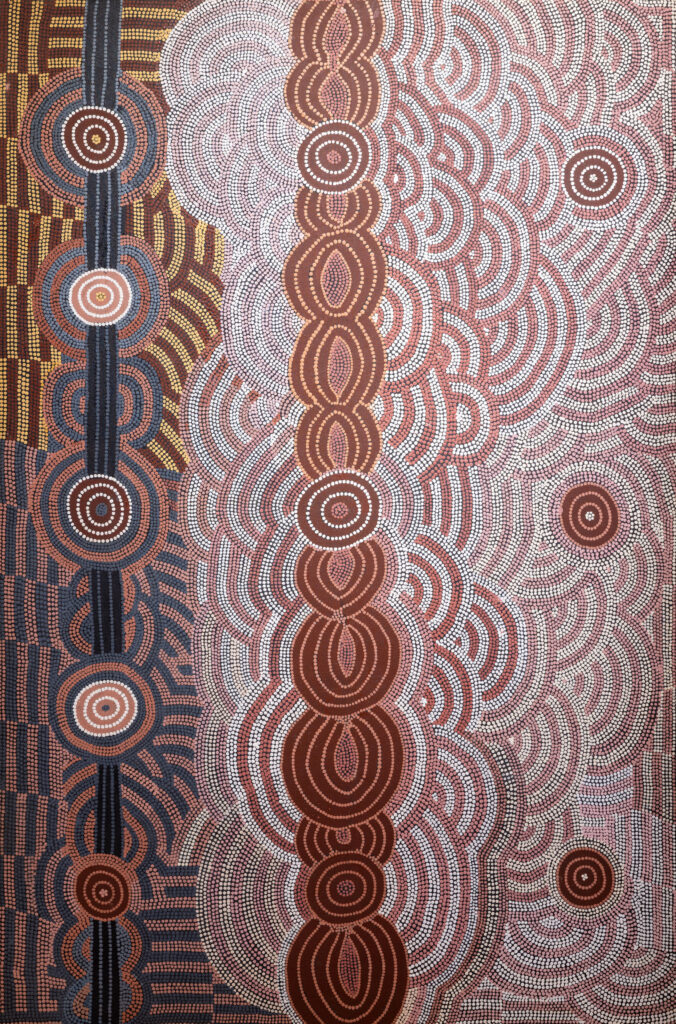
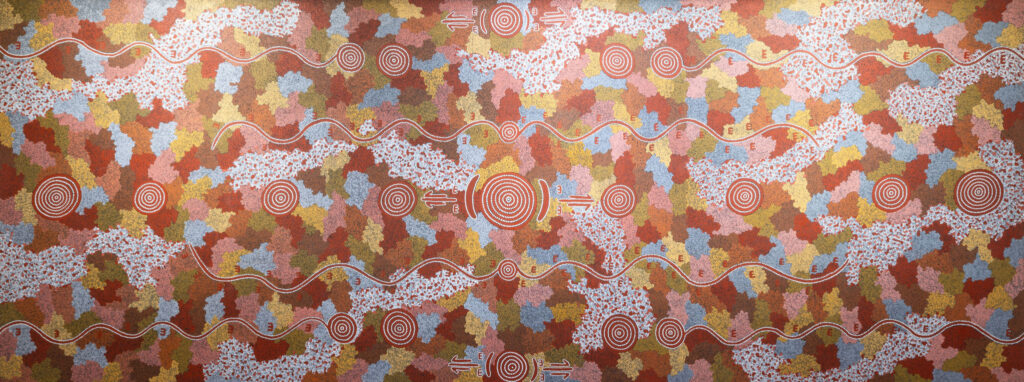
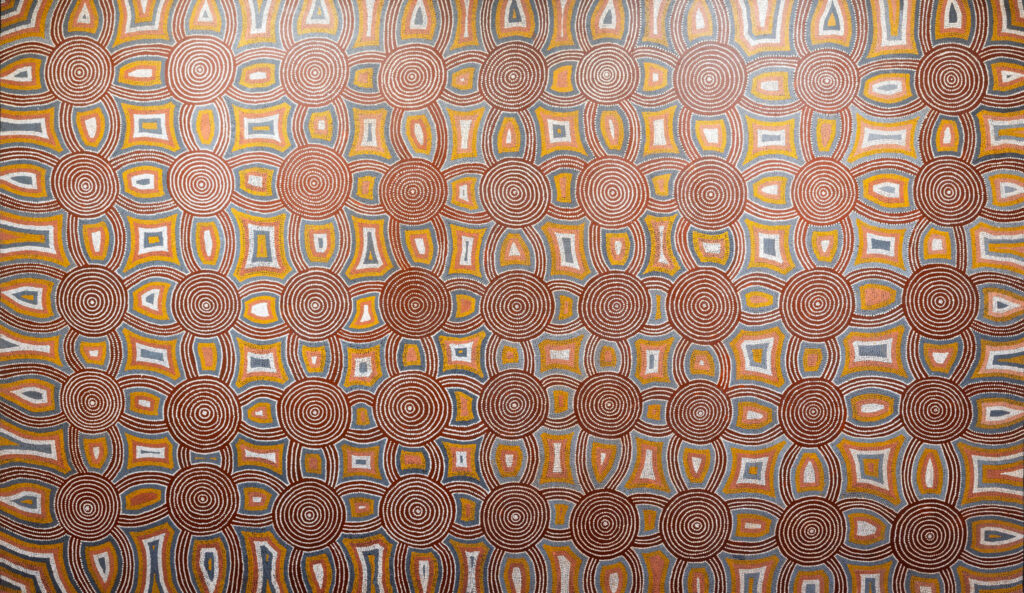
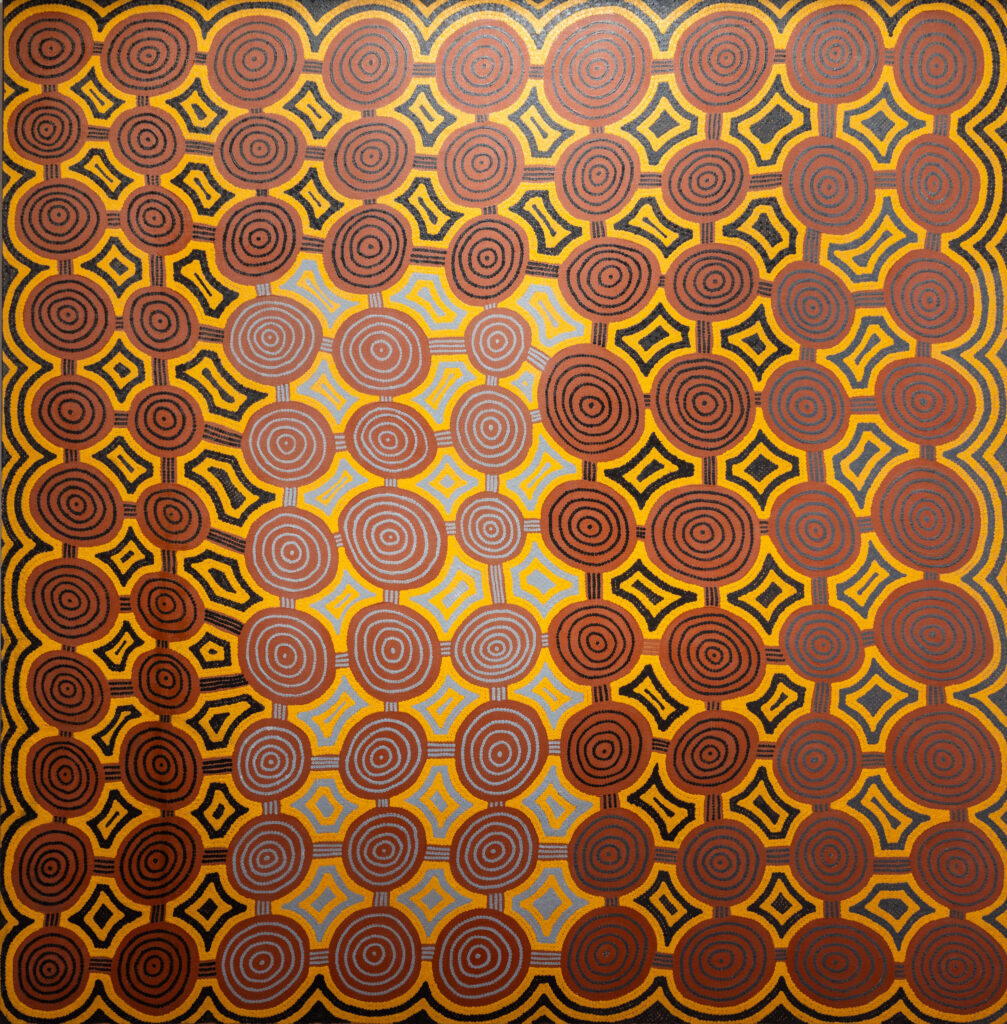
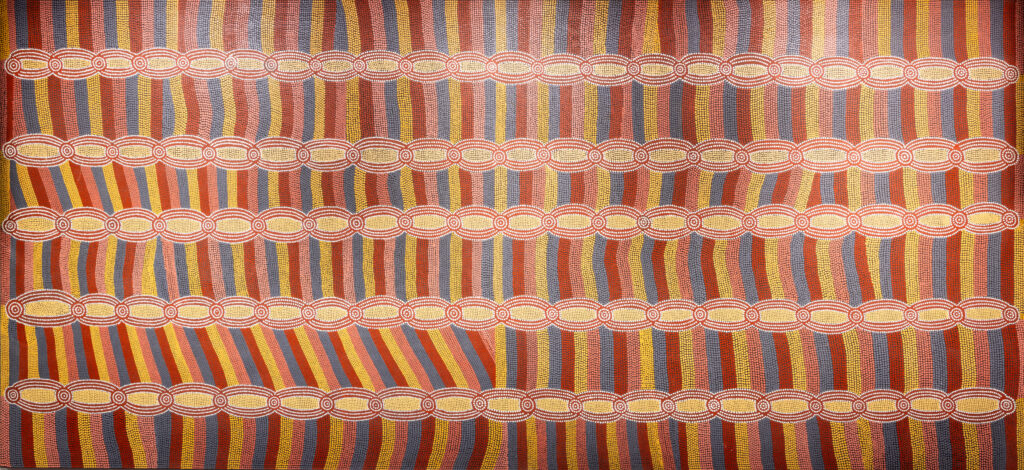
Painting and mark-making in Western Desert styles has existed in the heart of the continent for millennia. Traditionally, designs were made on utilitarian objects, on rock shelters and on the body and ground for ceremony. However, Aboriginal and Western art worlds rarely met until 1971, when schoolteacher Geoffrey Bardon arrived at Papunya – a remote community located around 250 kilometres north-west of Alice Springs. He met with community elders, who took an interest in the painting projects he had initiated with the school children, and supported a team of seven men, led by Kaapa Tjampitjinpa, to paint a large wall mural at the Papunya Special School. The mural represented the local Honey Ant Dreaming and its creation was the catalyst for the Papunya Tula (Western Desert) art movement.
A strong group of senior Pintupi, Luritja and Anmatyerr men continued to paint their Dreamings on small boards, beginning a movement that would sweep the desert and become recognised internationally as a unique Australian art movement. Later in 1972, the Papunya artists were introduced to painting on canvas as an alternative to painting on wooden boards and these more expansive works quickly gained wide acclaim from contemporary audiences.
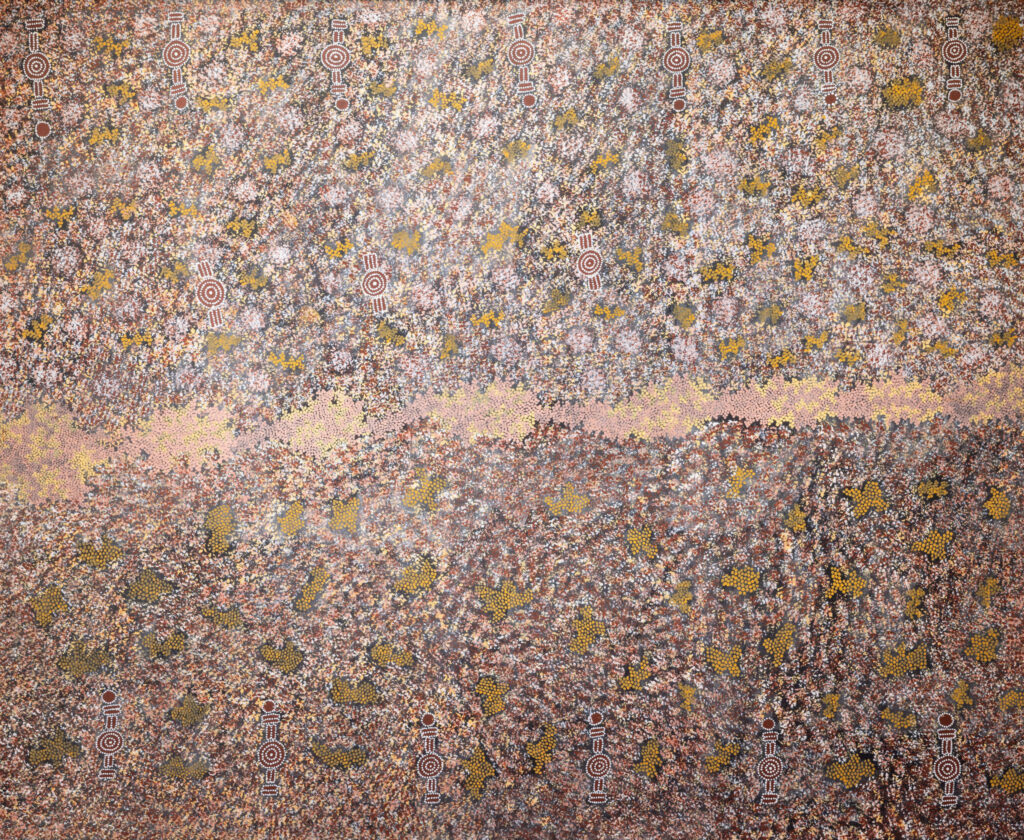
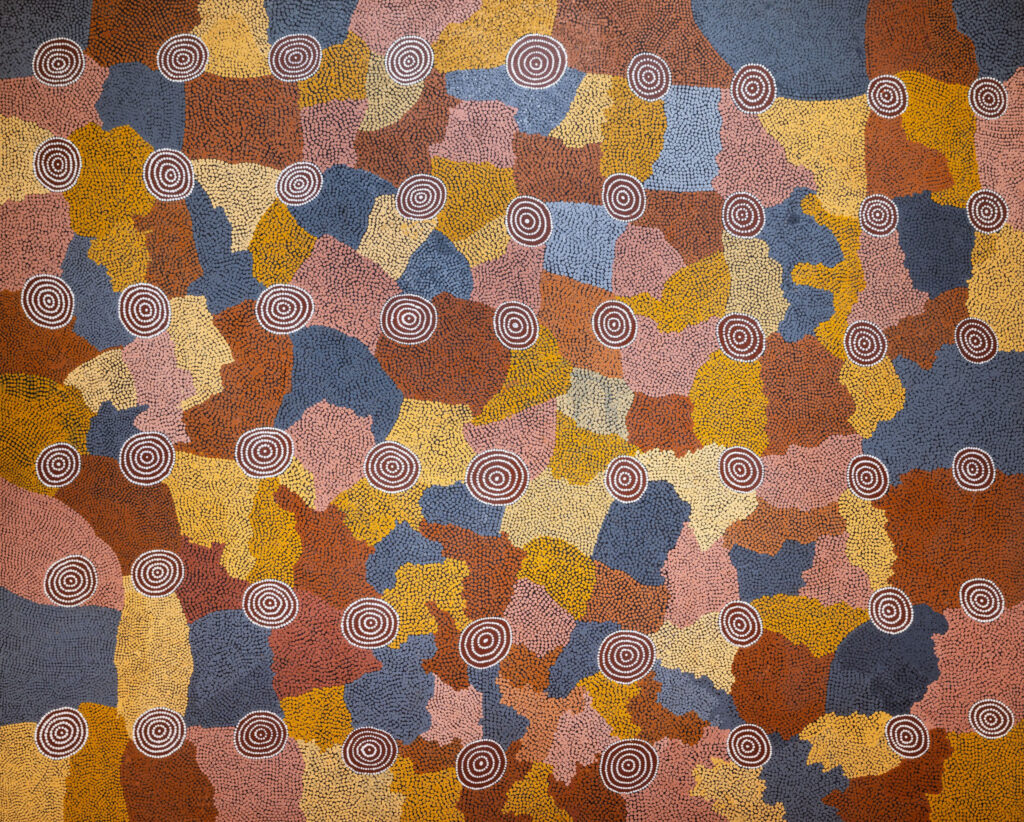
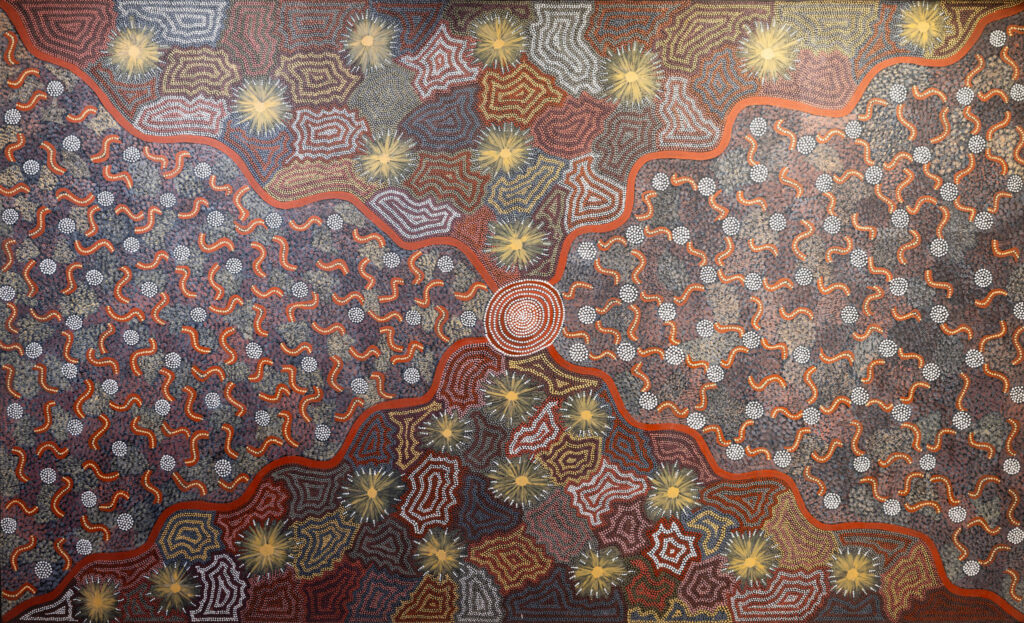
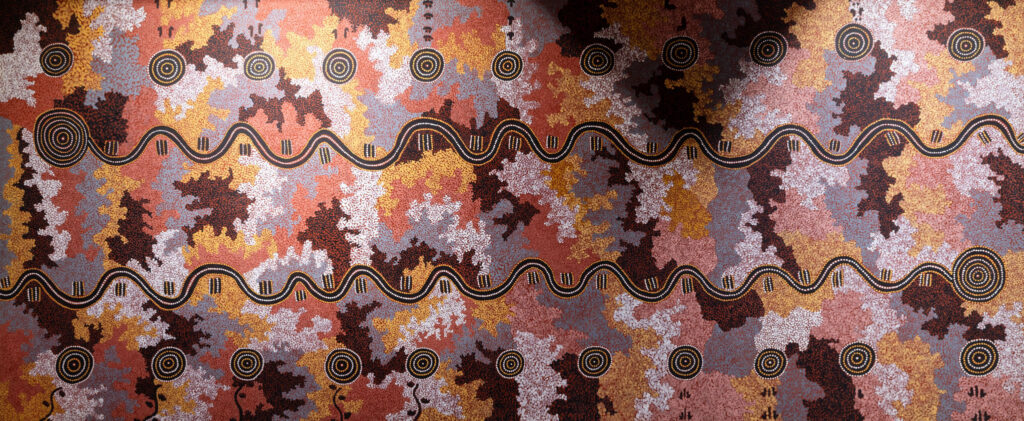
The BCEC Art Collection holds a nationally significant group of works from the 1980s by many of the leading artists of the movement, which were acquired as one group following their commission for Expo 88. Importantly, the Collection also features early work by many of the first Aboriginal women painters, many of whom had assisted their husbands from the beginning, but only began to be recognised as artists in their own right in the 980s.
The BCEC collection of Papunya Tula Western Desert painting celebrates an extraordinary moment in time from Australia’s most important art movement.